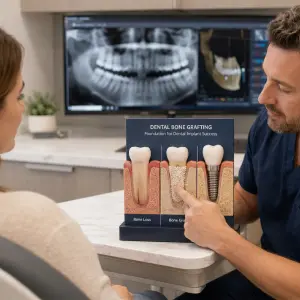
If you are researching dental implants in Yorba Linda, one of the biggest questions is whether you will need a bone graft first. The answer is not based on a guess or a one-size-fits-all rule. It depends on how much healthy jawbone you have where the implant will go, and whether that bone can support an implant in a stable, long-term way.
At our office, we often see that patients feel relieved once they understand what bone grafting is and how dentists decide when it is (or is not) necessary. Many people have no symptoms of bone loss, so the best next step is a proper evaluation.
TL;DR - How to Know If a Bone Graft Is Part of Your Implant Plan
A bone graft may be recommended before implants when the jawbone is too thin, too short, or not dense enough to hold an implant predictably. Imaging is what makes the decision clear.
- You might need a graft if a tooth has been missing for a long time or there is a history of gum disease.
- X-rays and sometimes 3D imaging help measure bone height, width, and location of nearby anatomy.
- Not all grafts are the same; the recommendation depends on your specific site and goals.
- Healthy gums matter; periodontal care can be an important step before implants.
- Next step: schedule a consultation to get a personalized plan and timeline.
What a Bone Graft Does (And Why It Is Sometimes Recommended)
A dental implant needs solid bone around it to stay stable. When bone has shrunk or weakened, a bone graft can help rebuild volume so the implant can be placed in a safer, more ideal position.
Bone changes can happen after tooth loss because the jaw no longer gets the same stimulation it received when a tooth root was present. In simple terms, the body may gradually remodel that area, and the ridge can become narrower over time.
Common Reasons People Need a Bone Graft Before Dental Implants in Yorba Linda
Needing a graft does not mean you did anything wrong. It is often the natural result of timing, biology, or past dental problems. Common factors include:
- A tooth has been missing for a while and the ridge has thinned.
- Gum disease (periodontal disease) that reduced supporting bone levels.
- Previous infection around a tooth that affected nearby bone.
- Anatomy limitations where there is not enough width or height in the planned implant site.
- Trauma or difficult extractions that left the area with less bone than expected.
Signs You Might Need a Graft (And Why Symptoms Are Not Always Obvious)
Some people expect to feel bone loss, but the jawbone can change quietly. That said, there are a few clues that can raise suspicion:
- Dentures or partials that feel less stable over time (the ridge can change shape).
- Long-term missing tooth with a visible "dip" in the gum ridge.
- History of periodontal treatment or deep gum pockets.
- Shifting teeth near the gap, which can happen as bone and bite forces change.
Imaging: How Your Dentist Confirms Whether You Have Enough Bone
The decision about bone grafting is based on clinical exam findings and imaging. Traditional dental X-rays can help screen the area and show overall bone levels. When more detail is needed, 3D imaging can provide measurements of bone width and height and help plan implant positioning around nearby anatomy.
This imaging-based approach is one reason an implant consultation is so valuable. Rather than relying on general assumptions, your treatment plan is built around what your jawbone actually looks like.
Where Periodontal Care Fits Into Implant Candidacy
Gum health is not a "nice to have" with implants. Healthy, stable gums and controlled inflammation support better long-term outcomes. If there are signs of active gum disease, periodontal treatment may be recommended before or alongside your implant plan.
If you want to learn more about the role of gum health, our periodontal care page explains the basics of diagnosis and treatment options.
Oral Surgery Questions: Who Places Implants and Manages Grafting?
Patients often ask whether they need to see an oral surgeon in Yorba Linda for implants or grafting. Some general and family dentists place implants and coordinate care, and some cases benefit from an oral surgery approach depending on complexity.
If you are exploring surgical options, you can also review our oral surgery page for an overview of related treatments and how care is typically planned.
What to Expect If a Bone Graft Is Recommended
Every plan is personalized, but patients usually want to know what "having a graft" actually means in real life. A few practical expectations:
1) You Get a Clear Plan, Not a Surprise
Once imaging and exam findings are reviewed, you should receive a step-by-step plan that explains the goal of the graft, the general timing, and what comes next for the implant.
2) Healing Time Is Part of the Strategy
Bone needs time to heal and mature. In our experience, the most helpful mindset is to think of grafting as preparation that supports a more stable implant foundation rather than "a delay." Your exact timeline depends on the graft type and your individual healing.
3) Aftercare Is Usually Straightforward
You will typically receive instructions on keeping the area clean, what foods to avoid for a short period, and when to come back for follow-up. If you have periodontal concerns, maintaining good home care and professional cleanings becomes even more important.
Next Steps: Getting a Personalized Implant Plan
If you are considering Dental Implants Yorba Linda patients rely on for function and confidence, the most productive next step is a consultation. That visit is where your dentist can evaluate your bone levels, gum health, and bite forces, then outline whether grafting is recommended and why.
You can also learn more about implant basics on our main dental implants page.
FAQs
No. Some patients have enough bone volume and density for an implant without grafting. A bone graft is recommended when the jawbone is too thin, too soft, or shaped in a way that would make implant stability less predictable.
Your dentist evaluates the area with an exam and imaging. X-rays help screen the site, and 3D imaging (when indicated) measures bone height, width, and nearby anatomy so the treatment plan can be customized.
Common reasons include a tooth missing for a long time, gum disease history, bone loss seen on X-rays, or a thin ridge that makes it hard to place an implant in an ideal position. Many people have no obvious symptoms, which is why imaging matters.
Yes. Active periodontal infection can affect bone levels and long-term implant health. Periodontal care and a stable, healthy gum environment are often part of getting ready for implant treatment.
Schedule an implant consultation so your dentist can review your goals, examine the site, and take appropriate imaging. From there, you will get a step-by-step plan that may include periodontal care, bone grafting, and implant placement timing.
Related Reading
Conclusion
A bone graft is not an automatic requirement for implants, but it can be the step that makes implant placement safer and more predictable when bone volume is limited. The best way to get a clear answer is a consultation with an exam and the right imaging so your plan matches your anatomy and goals.
Schedule a Consultation
To discuss your options for Dental Implants Yorba Linda patients choose for long-term tooth replacement, call 714-970-6331 to schedule an evaluation with Dr. Bruce M Rogers.